
YB Wilfred Yap Responds to Misleading Allegations by YB Chong Chieng Jen on the ART Project
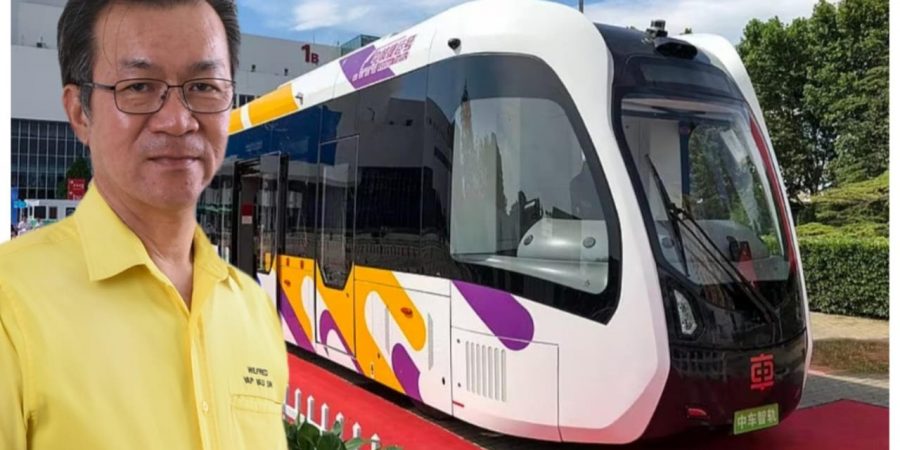
Kota Sentosa State Assemblyman, Wilfred Yap has issued a firm response to the recent statements made by YB Chong Chieng Jen, published in Free Malaysia Today, which attempted to discredit the Sarawak Government’s Autonomous Rapid Transit (ART) project. According to Wilfred Yap, the remarks made were not only misguided but also based on outdated comparisons and lacked understanding of the project’s full scope and significance.
He expressed disappointment that an elected representative continues to rely on fear-based narratives without offering any credible or realistic alternatives. Contrary to the claims made, the ART is far from being an improvised or unnecessary venture. It is the result of years of thorough planning and feasibility studies, and has received international recognition for its innovative and sustainable design. The project represents Malaysia’s first hydrogen-powered Autonomous Rapid Transit system and has been acknowledged by the International Association of Public Transport with a special recognition award. Locally, it has also received the Malaysia Technology Excellence Award for Smart City Transportation, a testament to its technological and environmental merits.
Wilfred Yap emphasised that the ART is being implemented through a transparent and phased approach. Phase 1 of the project covers 69.9 kilometres, comprising three major lines and vital infrastructure such as the Rembus Depot, hydrogen production facilities, a feeder bus network, and smart operations systems. Every stage of the project, from procurement to design, has been openly disclosed and debated in the Sarawak State Assembly. He stressed that to suggest this project lacks transparency or was rushed through without proper feasibility is a direct insult to the many Sarawakian professionals and experts who are working hard to bring it to life.
He also rebutted the claim that the RM5 to RM6 billion allocation is simply for purchasing buses. He clarified that the budget includes comprehensive development, such as land preparation, civil works, hydrogen refuelling depots, advanced fleet management systems, integrated technology infrastructure, and the vehicles themselves. The ART is not only a modern transport solution but also a catalyst for economic growth. It is expected to generate thousands of skilled jobs, attract new industries, and strengthen Sarawak’s position as a leader in the hydrogen economy.
In addressing concerns over the need for the ART, Wilfred Yap pointed out that it is not meant to replace community buses but to serve as the central backbone of a more integrated and efficient public transport system. The ART will work hand-in-hand with feeder buses and upgraded road networks to tackle long-term issues such as traffic congestion, urban sprawl, and emissions. He argued that relying solely on traditional buses would not be enough to meet the demands of the next 30 years.
He further reminded Sarawakians to remain cautious of political figures from outside the state who appear only to criticise, yet are absent when it comes to building, delivering, and being accountable. Wilfred Yap noted that many of those now criticising Sarawak’s development efforts were silent during past decades when the state struggled with underinvestment and infrastructure neglect. He questioned whether some of these voices are more interested in keeping Sarawak dependent and underdeveloped for political gain.
In closing, Wilfred Yap stated that Sarawakians are capable of making their own informed judgments. He reaffirmed his commitment to continue speaking with honesty, backed by facts and tangible progress, unlike those who seek publicity without offering any practical solutions or proven track record. He expressed his full support for YAB Premier Datuk Patinggi Tan Sri Abang Zohari and the GPS Government in their shared mission to deliver modern infrastructure, improve livelihoods, and ensure that no Sarawakian is left behind in the state’s journey toward a greener and more connected future.



Related News

Sebastian Ting: Water supply situation remains stable as residents prepare for pipeline shutdown
Piasau Assemblyman Datuk Sebastian Ting said the supply of drinking water at supermarkets and retailRead More

Sarawak should continue prioritising stability, unity and development, says Wilfred Yap
Kota Sentosa assemblyman Wilfred Yap has called on Sarawakians to continue supporting leadership that prioritisesRead More

Comments are Closed