
Sebastian Ting happy for stateless children to be issued temporary documents

Sarawak United Peoples’ Party Secretary General, Datuk Sebastian Ting welcomed the decision of the Premier office to issue temporary documents to eligible stateless children under 21 years old.
Describing it as a positive step for the stateless children, Ting said it was indeed an encouraging decision, especially for children and families who have been suffering from statelessness for a long time.
“We congratulate Sarawak Government for taking such a constructive move of granting temporary documents to eligible children under 21 years old under Article 15A of the Federal Constitution to help them access educational and medical facilities,” he said.
Ting who is also the Deputy Minister of Tourism, Creative Industry and Performing Arts added that while the power to grant citizenship under Article 15A of the Federal Constitution rests with the federal government, the Sarawak Cabinet has decided to reach out to stateless children within its powers to address the long-standing problems they faced in their lives.
He said that stateless children have been denied access to education and medical facilities, and their lives and upbringing have been affected because they do not have a piece of paper to prove their identity. In reality, however, education and healthcare are basic human rights and they should not be deprived of their rights for the sake of documentation. These children, he said, have suffered enough being in a limbo.
Ting pointed out that, according to the Minister of Women, Childhood and Family development, Datuk Sri Fatimah Abdullah, the temporary permit is only a solution to the problem of education and medical facilities and is not a long-term solution to the problem of statelessness.
Ting himself has been actively handling citizenship applications since 2004, both for children and adults. In his experience, there are three main causes of statelessness, including children born abroad to Malaysian parents, the absence of a marriage certificate for the Malaysian father and foreign spouse, and the presence of false documents.
He pointed out that statelessness has far-reaching consequences, from education and healthcare to life and work. Unfortunately, most of the children caught up in statelessness come from poor families, making their lives even more difficult.
“At present, the power to grant citizenship remains with the federal government’s Home Office and the Sarawak Government can only recommend it. Perhaps it is time for the federal government to consider delegating its powers to the Sarawak government to ensure that the issue of statelessness is resolved more quickly and efficiently, rather than a case that could drag on for years.”
He said that many of the children or persons applying for citizenship were actually born and bred in Sarawak and had to suffer for a long time because of a lack of documentation or parental negligence. He hoped that the federal government would take the matter seriously and adopt a more effective approach to the problem of statelessness.



Related News

Sebastian Ting calls to public to donate blood to save lives
Members of the public are encouraged to make blood donation a regular habit to helpRead More
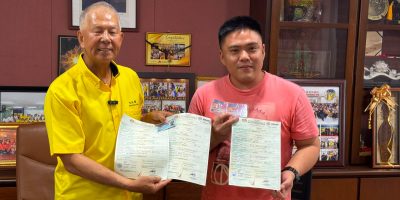
Sebastian Ting assists family in obtaining Malaysian citizenship after three-year wait
Piasau assemblyman Datuk Sebastian Ting has assisted a family in Miri to resolve their citizenshipRead More

Comments are Closed