
Chinese Independent schools – stress on character building
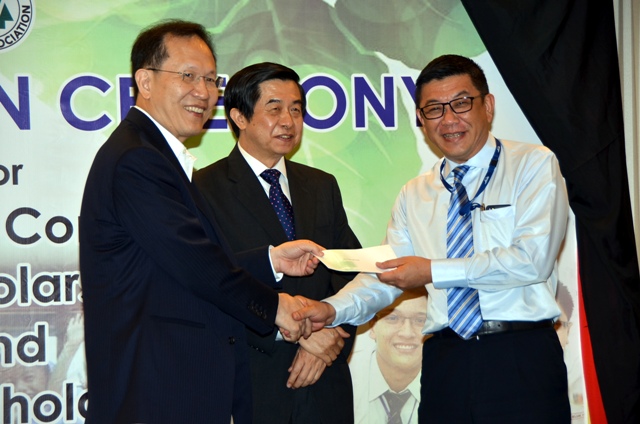
Chairman of the Committee of Management of Kuching Chung Hua Middle School No 1, 3 and 4, Richard Wee Liang Chiat who has been on the Board for almost six years, is trying his best to bring the three Independent schools to greater heights.
Having to run the three schools independent financially, it was no surprise that the Board would be in deficit of about RM2 million annually. Although that did not deter Wee from continuing, he said they were trying to come up with ideas to have some sound financial programs for the schools as at the moment, they had no choice but to rely for assistance from members of the public and organizations.
The Board would go out annually to raise funds and to ensure that the school were able to continue. Wee said through social media, they has reached out to a lot of old students through Facebook, Watsapp and other social media apps. In a reunion do last year, Wee said he was touched by many former students who flew back from US, China, Taiwan and other countries to do their bit.
One of Wee’s long term solutions was to move Chung Hua Middle School No 3 and turned the present site to a commercial lot. Although it was a proposal only, Wee believed that should that turn into reality, it would help the school a lot.
Chinese primary students not going to Middle schools
Getting students for Chung Hua No 3 and 4 is also a long standing issue with the Board.
There are about 7,000 pupils in Chinese Chung Hua primary schools and each year, less than 10 percent would go to Chinese Middle schools.
Wee said having to pay the RM1,300 is the reason why parents are sending their children to government aided schools. He said most of the parents were also wrong about the concept of Chinese education.
Most parents, he added, thought that six years of Chinese education is good for the children which he said is not enough. The six years, Wee pointed out, is only the foundation of Mandarin as in Secondary schools, it teaches the students about being respectful, honorable, trustworthy and filial. “In Chinese schools one need not have to be brilliant but have the correct attitude. The students have to look at the cultural aspect of it, the attitude towards life, the morality which has to be imprinted in a child so that he/she can grow to be a useful citizen in society,” he added.
Pointing out that secondary school is the most important formative year of a child, Wee said that was the time which shape a youngster’s future. He himself remembered that “I may not remember some of my primary school friends but I remember almost all of my secondary schools friends. Having come from Chung Hua No 1, Wee said the years of secondary school was all about bonding.
He said in the university, it is different as students were not in the same course and would only meet occasionally where as in secondary years, it was doing everything together and friendship could last forever.
The situation is improving slowly which Wee believed could be due to economic reasons as China is one of the up-coming giant economically in the world and Mandarin is a must if one wants to go into the business field. Wee said the problems surfacing in Government schools is also a pull factor. Not wanting to belittle other schools, Wee said discipline from both students and teachers is a must for a school to be successful.
While students were given orientation week, in Chinese schools, newly hired teachers were also given a week for themselves. “It is a sort of calling where you are told to give your best. Teaching in Chinese schools will not enrich nor starve you. I always tell teachers if anybody want to be rich, then teaching in Chinese school is certainly not the career for them as priority is all about students and sacrificing time and effort to make the school better,” he pointed out.
Like all schools, Wee said there is always a shortage of teachers and the Board has at times sponsored students to Taiwan or China and bonded them. At the moment, they are thinking of getting retired teachers from Taiwan who would be able to teach here and take the job as a sort of holiday.
He said some of the students who wanted to teach in Chinese schools were also bonded and given training in Taiwan or China through the sponsorship of the Board.
On the Unified Examination Certificate (UEC) which is not recognized by the Government, Wee pointed out that there is no question over the high standard of UEC. All our Asian countries including Australia, Singapore, England and United States recognized the UEC for entrance into their universities
He said a lot of problems would be solved if UEC is recognized. Since the government did not have enough teachers, they can get in a specific numbers of those with UEC as trainees and that would solved a huge problem of teacher shortage.
History of Chung Hua schools
The Hokkian Assocation first started a Chung Hua School in 1912 and from there on it was followed by the Teochew in 1916, Cantonese, 1917, Hakka, 1923 and Chawan, 1939. All schools were closed in August 1942 to August 1945 due to the Japanese occupation.
In October 1945, the various Dialectal Association named the schools as Chung Hua No 1, 2, 3, 4, 5 and all of them combined their resources and finance to run the schools more effectively. Later other associations took part in assisting and today, 14 associations are helping to run the Chinese schools.
Chung Hua No 2 belonged to the Teochew Assocation and in the 80s, they opted to join the Government stream schools and became Kuching High School.
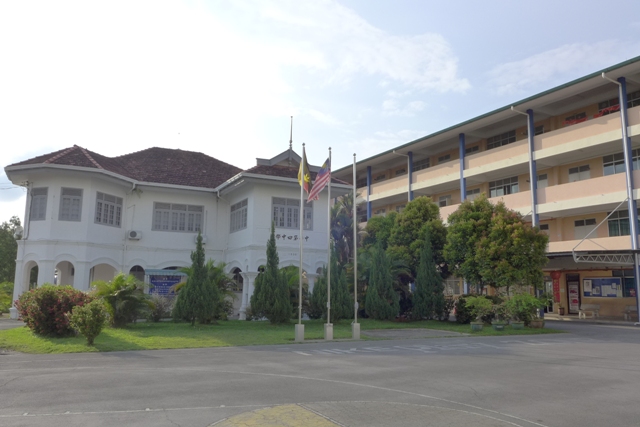
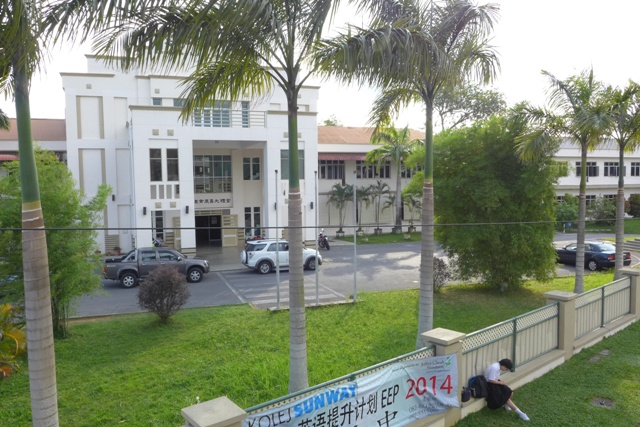
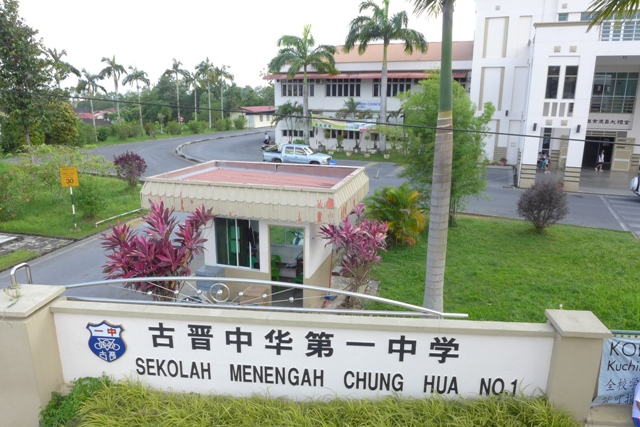
Chung Hua No 1 is situated at Jalan Pending with 1,800 students, No 3 at Tun Razak Road with 380 students and No. 4 at Haji Taha which has 280 students.




Related News
600 SPM Candidates from Batu Kawa Attend Two-Day Examination Preparation Camp
A total of 600 students residing in the Batu Kawa constituency who will be sittingRead More

Federal laws need to be strengthen to prevent scam epidemic, says Wilfred Yap
Kota Sentosa assemblyman Wilfred Yap said the relentless rise of financial scams across Malaysia hasRead More

Comments are Closed